

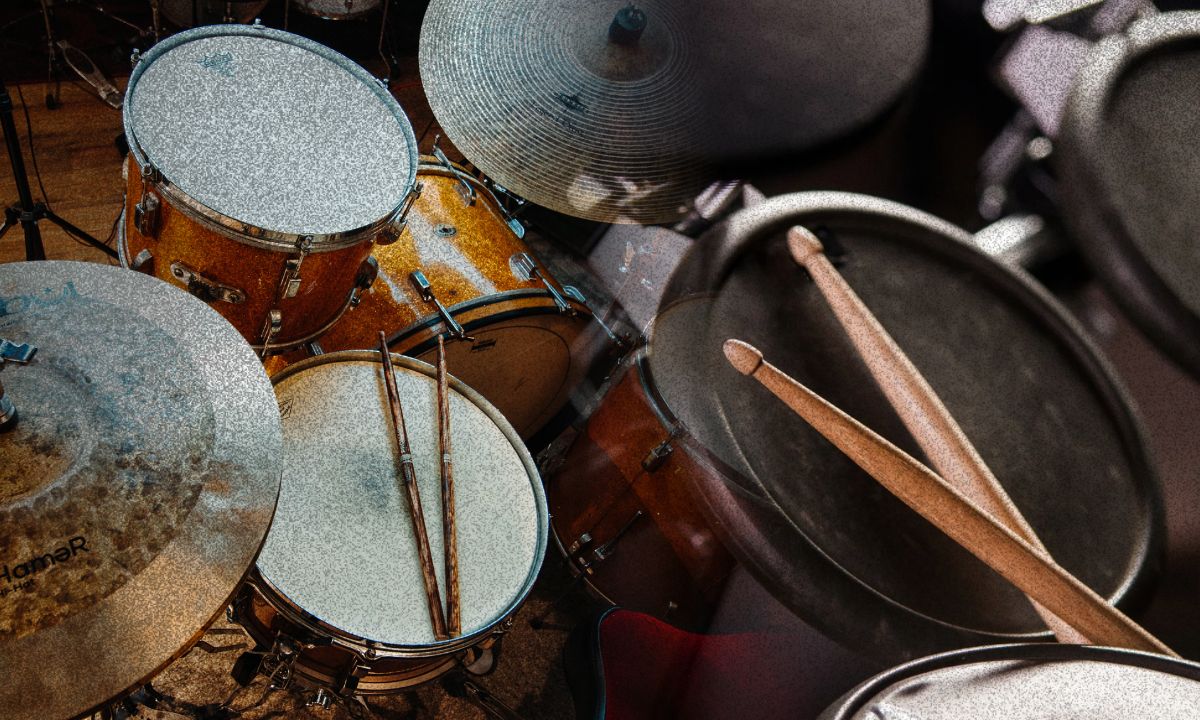
Drums make more sense once you stop treating them as one giant list of instrument names.
A standard acoustic kit, an electronic drum set, a djembe, a pair of congas, marching tenors, and orchestral timpani all belong to the percussion world, but they are built differently, played differently, and expected to do very different musical jobs.
The easiest way to understand the different types of drums is to group them by how they produce sound, how they are played, and where musicians use them.
Some drums live inside a larger kit. Others work as complete instruments by themselves. Some produce a broad rhythmic attack, while others can be tuned and played with surprisingly precise pitch control.
That distinction matters whether you’re learning percussion, identifying unfamiliar gear, or trying to work out exactly what a drummer is selling.
The Main Types of Drums at a Glance
There is no single universal list containing every type of drum. Percussion traditions developed across different cultures, musical systems, performance settings, and technologies, so several classification methods overlap.
For a working musician, these six groups provide a useful starting point:
| Drum family | Common examples | Usually played with | Typical role |
|---|---|---|---|
| Acoustic drum set | Snare, kick, rack tom, floor tom | Sticks, pedals, brushes | Modern band rhythm |
| Electronic drums | Trigger pads, electronic kick, electronic cymbal pads | Sticks and pedals | Practice, recording, live electronic sounds |
| Hand drums | Djembe, congas, bongos, cajon, tabla | Hands and fingers | Ensemble rhythm, accompaniment, traditional music |
| Frame and shaped drums | Bodhrán, frame drum, goblet drum, talking drum | Hands, beaters | Traditional and regional percussion |
| Orchestral drums | Timpani, concert bass drum, concert snare | Mallets and sticks | Orchestral and concert percussion |
| Marching drums | Marching snare, bass drum, tenor drums | Sticks and mallets | Mobile ensemble performance |
These categories are not sealed compartments.
A snare drum, for example, appears in drum kits, concert percussion sections, and marching ensembles. The basic name survives, while size, mounting, tuning, playing technique, and musical function change around it.
That is why the instrument name alone rarely tells the whole story.
Acoustic Drum Sets
The acoustic drum set is probably the first thing most people picture when they hear the word “drums.”
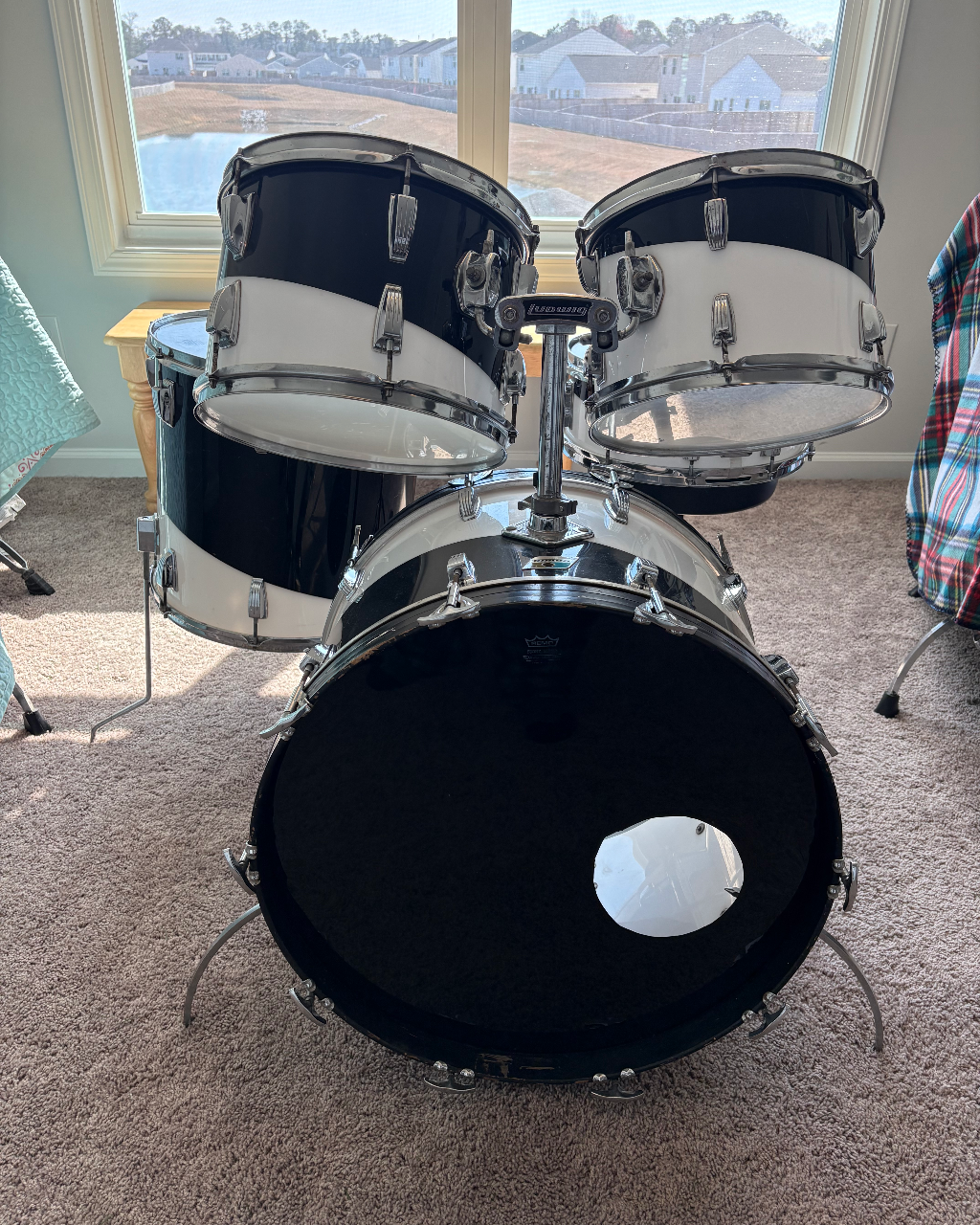
Rather than being one instrument in the traditional sense, a drum kit is a collection of percussion instruments arranged so one drummer can control several voices with both hands and feet. Yamaha describes the basic setup around bass drum, snare drum, toms, and cymbals, while noting that the configuration can be rearranged or expanded according to the drummer and musical style.
The shells and drumheads create the acoustic sound directly. Strike the head and it vibrates; shell dimensions, head tension, construction, tuning, and playing force all influence what comes back at you. Higher drumhead tension generally raises the pitch, while lower tension produces a lower response.

Snare, Bass Drum and Toms
Three families create most of the recognizable drum voices inside a conventional kit.
The snare drum gives you the sharp, articulate crack commonly associated with backbeats and accents. Snare wires beneath the resonant head produce the buzzing response that separates it from a conventional tom.
The bass drum, often called the kick drum, provides the low-end pulse. A drummer plays it with a foot-operated pedal rather than striking the head directly with a handheld stick.
Then you have the toms.
Rack toms usually sit above or near the bass drum, while floor toms occupy the lower register beside the drummer. Different diameters and tunings create a spread of pitches that lets fills move around the kit rather than staying on one repeated note.
If you want the complete breakdown of the hardware, cymbals, shell packs, piece counts, and individual drum-set components, see our guide to the parts of a drum set.
That separation is useful here.
The snare, kick, and toms are individual types of drums. The drum set is the larger playing system that brings them together.
Acoustic Kit Styles Are Configurations, Not Entirely Different Instruments
Terms such as rock kit, jazz kit, or fusion kit often describe configurations rather than completely separate families of percussion instruments.
A jazz drummer may favor a smaller bass drum and a compact tom layout. A rock drummer may prefer larger shells, heavier cymbals, and a different tuning range.
But both are still working from the same basic acoustic-kit vocabulary.
The differences come from shell dimensions, tuning, heads, cymbal choice, hardware layout, and playing demands rather than from replacing the fundamental instrument family.
Electronic and Hybrid Drums
Electronic drums change what happens after the strike.
Instead of relying only on an acoustic drumhead and shell to create the final sound, electronic systems use pads or triggers to send performance information to a sound module. That module then produces the selected drum, percussion, sample, or other programmed sound.
This opens a completely different set of possibilities.
Electronic Drum Kits
A typical electronic kit replaces conventional acoustic shells with rubber, mesh, or other sensor-equipped playing surfaces.
You still perform with familiar physical movements: sticks hit pads, feet operate kick and hi-hat controls, and the kit is laid out to resemble an acoustic setup.
But the sound itself comes through headphones, monitors, an amplifier, recording equipment, or another audio system.
Roland’s documentation describes electronic pads as trigger sources connected to a drum module, with the module configured around the type of pad attached to each input.
That makes electronic kits particularly useful when you need controlled monitoring, MIDI or digital integration, multiple sound sets, or quieter practice than a conventional acoustic kit allows.
The feel is not identical to moving air through full acoustic shells and cymbals.
But the instrument is still played physically, dynamically, and rhythmically. Calling electronic drums “fake drums” misses what the technology is actually doing.

Hybrid Drum Setups
Hybrid drumming combines acoustic instruments with electronic triggering.
An acoustic snare, kick, or tom can remain fully playable as an ordinary drum while an attached trigger simultaneously sends a signal to an electronic module. The drummer can then layer another sound on top of the acoustic note or trigger a completely separate sample.
Roland’s TM-2 system, for example, accepts acoustic drum triggers and electronic pads so players can blend conventional drums with samples and electronic percussion.
That means one snare hit can produce the natural acoustic drum plus a clap, electronic layer, tambourine, or processed sample.
You are not replacing the drum.
You’re expanding its vocabulary.
Is a Drum Machine a Type of Drum?
Not literally.
A drum machine is an electronic musical instrument designed to generate or sequence percussion sounds. It may reproduce kick, snare, tom, cymbal, hand-drum, or synthetic percussion sounds, but it does not become a physical drum simply because those sounds are called drums.
The distinction matters when you’re shopping.
An electronic drum kit is designed around physical performance with pads and pedals. A drum machine is usually designed around programming, sequencing, buttons, pads, or step-based composition.
Both belong in a drummer’s world.
They are not the same instrument.
Hand Drums

Hand drums remove one obvious layer from the drum-set experience: the stick.
The player’s fingers, palms, fingertips, and different parts of the hand interact directly with the drumhead or playing surface. That direct contact creates an enormous range of attacks, muted notes, open tones, slaps, bass strokes, and pitch changes.
“Hand drum” is therefore a playing-method category, not one single construction style.
A djembe and a pair of tabla look almost nothing alike. They still share the fact that the hands are central to producing the performance.
Djembe
The djembe, also written jembe, is a goblet-shaped hand drum strongly associated with the Mandé region of West Africa.
The Metropolitan Museum of Art identifies jembe traditions across the broader Mandé area and describes the instrument as a single-headed goblet drum played with the hands. Different striking positions and techniques allow the player to produce contrasting tonal colors and pitches.
Its shape is immediately recognizable: a relatively wide drumhead narrows toward the middle before opening again near the base.
That goblet construction matters because “djembe” describes a specific musical tradition and instrument, not simply any hand drum with a skin on top.
Congas and Bongos
Congas and bongos often appear near each other, but they are not interchangeable.
Congas are tall, single-headed drums normally played in sets. Modern professional configurations frequently use multiple congas of different sizes, giving the performer a spread of voices rather than one repeated drum tone.
The Met traces the modern conga to earlier Afro-Cuban instruments and notes that professional performers commonly use sets of two or three drums.
Bongos are much smaller paired drums.
They sit higher, use different hand technique, and occupy a different tonal range. Where congas give the player deeper open tones and substantial low-mid body, bongos provide a tighter, more cutting voice.
Same broad hand-percussion world.
Very different instrument behavior.
Cajon
The cajon looks almost too simple to be a drum.
It is essentially a box-shaped percussion instrument that the player sits on and strikes with the hands. Different parts of the front playing surface give different responses, letting the player create lower bass-like hits and sharper upper accents.
That compact format explains part of its modern appeal.
A cajon can provide a useful rhythmic foundation in acoustic groups, stripped-down performances, singer-songwriter arrangements, and situations where bringing a full drum set makes little practical sense.
It does not imitate every voice of a drum kit perfectly.
It does not need to.
Its value comes from producing several useful percussive colors from one portable object.
Tabla
Tabla presents a completely different approach to the hand-drum idea.
What people casually call “a tabla” is normally a paired drum system. The Met explains that the smaller wooden drum is played with the right hand, while the larger bayan is usually constructed from metal or pottery and played with the left. The two drums use specially prepared playing surfaces that help create their wide tonal range.
The bayan is particularly expressive because hand pressure on the head lets the performer bend and manipulate pitch while playing.
That is far removed from the role of a conventional rock snare.
Both are drums.
But their tuning logic, hand technique, musical language, and expressive possibilities come from different traditions.
Frame, Goblet and Other Drum Shapes
Drums can also be classified by the shape of their bodies.
This approach becomes useful once you move beyond standard drum kits because construction often tells you something about how the instrument is held, tensioned, played, and projected.
Frame Drums

A frame drum uses a drumhead stretched across a relatively shallow frame rather than a deep shell.
Different traditions use frame drums with very different playing techniques, tuning methods, sizes, and cultural functions.
The category is therefore broader than one instrument name.
A bodhrán, for example, belongs to the frame-drum family, but calling every frame drum a bodhrán would be like calling every solid-body electric guitar a Telecaster.
The construction family comes first.
The specific instrument comes second.
Goblet Drums
Goblet drums narrow through the body and expand toward one or both ends, creating the familiar chalice-like silhouette.
The djembe is one well-known example.
Other goblet drums use different materials, head systems, dimensions, tuning methods, and regional playing traditions.
The important point is structural: goblet drum describes the body shape, not one universal instrument.
This is where drum terminology starts to overlap.
A djembe can simultaneously be described as a hand drum, a goblet drum, and a single-headed membranophone. None of those descriptions cancel the others.
They simply classify the same instrument from different angles.
Talking and Pitch-Bending Drums
Some drums let the player manipulate membrane tension while performing.
The Yoruba dundun, for example, uses a waisted body and variable-tension construction. By changing pressure on the tension system, the player changes the drum’s pitch while striking it.
This creates something many beginners do not expect from drums: deliberate pitch movement during a note or phrase.
Drums are often described as “unpitched percussion,” but that phrase is only useful up to a point.
Many drums have clear pitch centers. Some are precisely tunable. Others, like timpani and variable-tension talking drums, make pitch control central to the instrument.
Orchestral and Concert Drums
Walk from a rock stage into an orchestra and several familiar drum names follow you.
Their jobs change.
Concert percussion uses specialized instruments, larger dynamic ranges, different mallets and sticks, written orchestral parts, and techniques designed around an ensemble that may include dozens of acoustic instruments.
Timpani
Timpani are among the clearest examples of drums functioning as pitched instruments.
Each drum uses a large bowl or kettle-shaped shell with a membrane stretched across the top. Modern instruments commonly use foot pedals to alter head tension and therefore change pitch during performance.
The Philharmonia describes timpani as kettledrums equipped with pedals for pitch changes, typically played with specialized mallets and used for both rhythmic weight and fundamental chord tones within the orchestra.
That makes timpani fundamentally different from toms.
A tom can be carefully tuned, but it usually serves as part of a drum-set voice spread. Timpani are expected to occupy intentional pitches within orchestral writing.
Concert Bass and Snare Drums
The words bass drum and snare drum also appear in concert percussion.
But context changes what those names mean.
A concert bass drum is generally much larger and is struck with handheld mallets rather than operated by a kick pedal. It functions as an orchestral percussion instrument, not as the foot-controlled rhythmic foundation of a drum kit.
Concert snare technique also develops around orchestral articulation, rolls, dynamics, and written repertoire rather than only drum-set backbeats.
Same basic instrument families.
Different musical jobs.
Marching Drums
Marching percussion has one obvious requirement that changes the entire setup:
the instrument has to move with the player.
That means shell design, carriers, harnesses, projection, tuning, durability, and ensemble arrangement all matter differently than they do on a stationary drum kit.
Marching Snare
A marching snare is designed for strong articulation and projection.
It is carried in front of the player and played with two sticks, often within a tightly coordinated drumline where rhythmic precision between performers matters as much as the sound of one individual instrument.
The resulting playing technique can be highly specialized.
Do not assume that a drummer who plays a standard kit snare and a competitive marching snare is approaching them in exactly the same way.
Marching Bass Drum
Marching bass drums are carried vertically and struck with handheld mallets.
That alone separates them from the bass drum in a conventional kit, where the player sits behind the shell and uses a foot pedal.
In many marching ensembles, multiple bass drummers carry differently sized drums. The resulting parts can distribute a larger rhythmic or melodic pattern across the line.
One family name.
Completely different physical execution.
Tenor / Multi-Tenor Drums
Marching tenors place several tom-like drums in front of one performer.
The configuration lets the player move rapidly between different pitches and playing zones while marching, creating patterns that have more melodic contour than a single snare can provide.
You may also hear terms such as quads, quints, or multi-tenors, depending on the number and configuration of drums.
Again, the number tells you about the setup.
It does not create an entirely new theory of percussion.
How the Major Drum Types Differ
The easiest way to compare drums is to stop asking which one is “better” and instead ask what the instrument expects from the player.
| Type | Sound source | Main playing method | Pitch behavior | Typical context |
|---|---|---|---|---|
| Acoustic kit | Vibrating drumheads and cymbals | Sticks, brushes, pedals | Broad tuning range, usually rhythm-focused | Rock, jazz, pop, country, live bands |
| Electronic kit | Triggered digital/electronic sounds | Sticks and pedals on pads | Depends on module/sample | Practice, recording, electronic/live hybrid use |
| Hand drums | Vibrating heads or striking surfaces | Hands and fingers | Varies widely | Traditional music, acoustic groups, ensemble percussion |
| Timpani | Tensioned membrane over kettle shell | Mallets | Precisely adjustable pitch | Orchestra and concert music |
| Marching drums | Acoustic drumheads | Sticks/mallets while carrying instrument | Tuned for ensemble projection | Marching band, drum corps |
| Hybrid setup | Acoustic sound plus triggers | Sticks/pedals plus electronics | Acoustic and programmed layers | Modern live and production settings |
One classification still does not explain every drum.
A djembe is both a hand drum and a goblet drum.
Tabla are hand drums with deliberate tonal and pitch behavior.
A marching snare and drum-set snare share basic snare construction, but the player interacts with them in very different physical and musical systems.
So the useful question is not:
“Which box does this drum fit into?”
Ask:
“How is this drum built, how do you play it, and what job does it perform?”
That will get you much closer to understanding the instrument.
Which Type of Drum Makes Sense for You?
Start with the music you actually want to make.
If you want to play conventional rock, pop, funk, jazz, country, or similar band music, an acoustic drum kit gives you the standard kick, snare, tom, cymbal, and pedal vocabulary those styles rely on.
If volume is a major limitation, an electronic kit gives you familiar stick-and-pedal coordination with headphone monitoring and selectable sounds.
Want both worlds?
A hybrid setup keeps acoustic drums under your hands while adding electronic layers, samples, or triggered sounds.
For stripped-down acoustic music, a cajon gives one performer several useful percussive voices without transporting a full drum set.
If you’re drawn to hand-percussion traditions, start with the specific instrument and musical language rather than buying something merely because it belongs to the “world percussion” aisle. Djembe, congas, tabla, frame drums, and talking drums carry different techniques, histories, repertoire, and ensemble roles.
Orchestral players face another path entirely.
Timpani, concert snare, concert bass drum, mallet instruments, cymbals, and accessory percussion form part of a broader percussion education rather than a single drum-kit skill set.
Marching percussion is similarly specialized.
The physical demand, ensemble precision, carrying systems, stick heights, tuning, and visual coordination turn marching snare, bass, and tenors into their own performance discipline.
Choose the musical job first.
Then choose the drum.
Browse Drums by the Type You Now Recognize
Knowing the terminology makes shopping much easier.
A listing described only as a “drum set” tells you very little until you identify whether it is acoustic or electronic, which drums are actually included, whether cymbals and hardware come with it, and whether the seller is offering a complete setup or just the shells.
Resyn’s current drum inventory separates several of these categories directly, including acoustic drums, electronic drums, and hand drums.
You can also browse drums and percussion on Resyn when you want to compare complete kits, individual drums, and related percussion gear in one place.
The names stop being trivia at that point.
They tell you what you’re actually looking at.
Frequently Asked Questions About Drum Types
What are the main types of drums?
A practical modern classification includes acoustic drum-set drums, electronic drums, hand drums, frame or shaped drums, orchestral drums, and marching drums.
Each group contains many individual instruments.
What are 10 common types of drums?
Ten widely recognizable examples are:
- Snare drum
- Bass or kick drum
- Rack tom
- Floor tom
- Electronic drum
- Djembe
- Conga
- Bongo
- Cajon
- Timpani
That list is useful for orientation, but it is not a complete taxonomy.
What drums are found in a standard drum set?
A conventional acoustic kit normally centers on a snare drum, bass drum, rack tom or toms, and a floor tom.
Cymbals and hardware complete the setup, but they are separate instrument/equipment groups. Yamaha likewise describes a common five-piece kit around two tom-toms, one floor tom, a bass drum, and a snare.
See our complete guide to the parts of a drum set for the full anatomy.
What is a small drum called?
There is no single universal name for a small drum.
A snare, bongo, small tom, compact frame drum, and many other percussion instruments can all be physically small while remaining completely different drum types.
Identify the construction and playing method rather than relying only on size.
Are cymbals drums?
No.
Drums normally create sound from a stretched membrane or drumhead, while cymbals create sound through the vibration of the metal body itself.
Both belong to the percussion family, which is why they regularly appear together in drum sets and percussion sections.
Are electronic drums real drums?
Electronic drums are real musical instruments built around drumming technique, but their sound-production system differs from an acoustic drum.
The player strikes pads or triggering surfaces, and an electronic module produces the resulting sound. Acoustic drums create their primary sound mechanically through vibrating heads, shells, and surrounding air.
Different technology.
Same need for timing, dynamics, coordination, and musical judgment.
Drum Types Make Sense Once You Group Them by How They Are Built and Played
You do not need to memorize every drum name to understand percussion.
Start with the big families: acoustic, electronic, hand, frame or shaped, orchestral, and marching drums. Then look at how the instrument produces sound, how the player interacts with it, and what job it performs in the music.
That turns an apparently endless list of snares, toms, djembes, tabla, timpani, congas, electronic pads, and marching drums into something much simpler.
You can identify the instrument.
And, more importantly, you can understand why it exists.
