

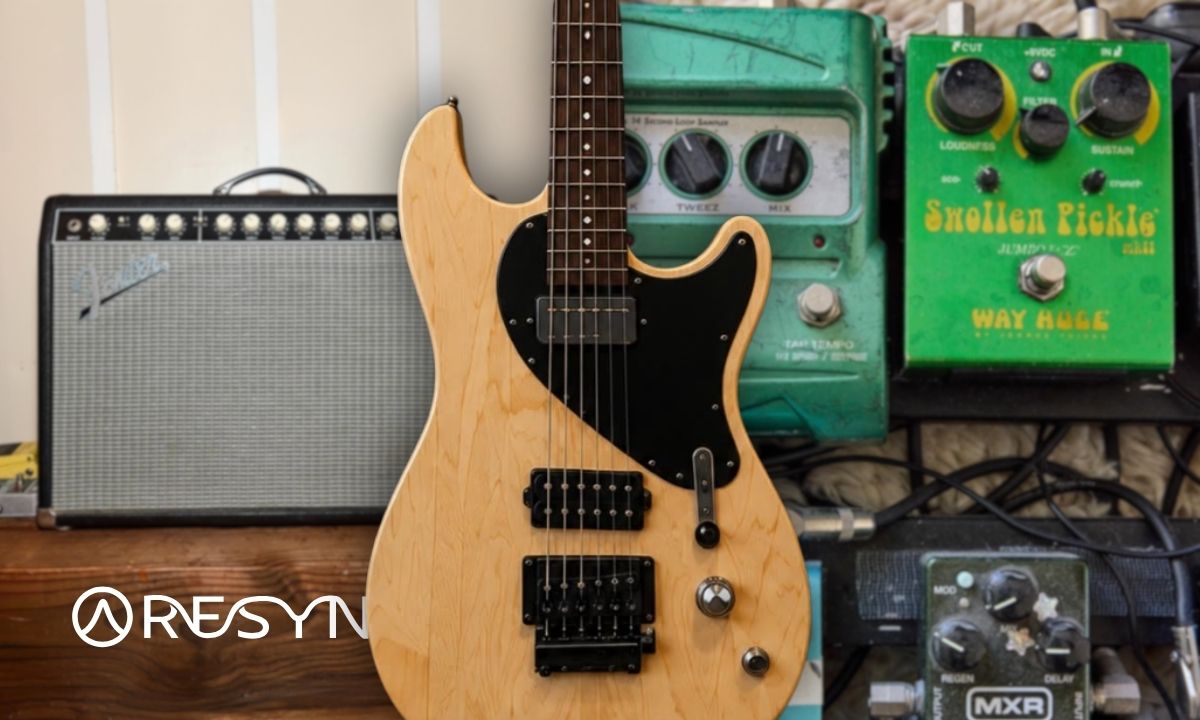
Buying your first guitar creates a strange little problem. You finally have the instrument, then immediately discover an entire wall of tuners, straps, strings, cables, cases, capos, stands, pedals, tools, and small plastic things that apparently all want your money.
You do not need most of them yet.
A beginner guitarist needs a playable guitar, a reliable way to tune it, and a few basic accessories that keep the instrument usable. If you play electric guitar, add an amplifier and instrument cable. Everything else falls into one of three categories: useful now, useful later, or completely unnecessary until you know why you want it.
That distinction matters. Good beginner gear removes friction from practicing. Bad beginner shopping creates a pile of equipment before you can comfortably change between three chords.
The Essential Guitar Gear Checklist
Here is the practical version.
| Gear | Do You Need It? | Why |
|---|---|---|
| Guitar | Need now | You need an instrument that plays comfortably and stays reasonably in tune. |
| Tuner | Need now | Practicing on an out-of-tune guitar trains your ear around the wrong reference. |
| Picks | Need now for most players | Essential for many electric and steel-string acoustic styles, though not every guitarist uses one. |
| Spare strings | Strongly useful | Strings wear out and occasionally break. A compatible spare set prevents unnecessary downtime. |
| Amplifier | Electric guitar: need now | A conventional electric guitar needs amplification for its intended sound and practical volume. |
| Instrument cable | Electric guitar: need now | Connects a conventional electric guitar to the amplifier. |
| Gig bag or case | Strongly useful | Protects the guitar during transport and storage. |
| Guitar stand | Strongly useful | Gives the guitar a stable place to live when it is not in its case. |
| Strap | Useful | Needed for standing and helpful for stabilizing some guitars while seated. |
| Metronome | Useful | Helps develop consistent timing. An app works fine at first. |
| Capo | Useful later | Changes the playable key while preserving familiar chord shapes. |
| Effects pedals | Can wait | Useful once you understand what sounds or problems you want the pedal to address. |
This basic hierarchy also matches the broad pattern appearing across current beginner-guitar search results. Tuner, picks, spare strings, strap, case or bag, stand, cable, and amplification appear repeatedly, while Google’s direct answer reduces the minimum setup even further: guitar, tuner and picks, with an amplifier and cable added for electric guitar.
So start small.
What Every Beginner Guitarist Needs
A Guitar That Is Playable and Comfortable
Your first guitar does not need exotic wood, boutique pickups, hand-wound electronics, or a finish named after an obscure desert sunset.
It needs to work.
A beginner guitar should feel comfortable enough that the instrument itself is not fighting every practice session. The strings need to fret cleanly, the tuning machines need to function, the controls should operate normally, and the physical size needs to suit the player reasonably well.
This matters more than the logo on the headstock.
A guitar with excessively high string action, sharp fret ends, unstable tuning, damaged electronics, or other setup problems makes learning harder for reasons that have nothing to do with your ability. Beginners often interpret that resistance as personal failure because they do not yet know what a properly functioning instrument feels like.
If you already own a guitar and something seems unusually difficult, do not immediately assume you need a better instrument. You may simply need the current guitar inspected or set up.
That topic deserves its own guide.
A Reliable Guitar Tuner
Tuning is part of playing guitar, not a maintenance task you perform once every few weeks.
You want a reference you can trust.
A clip-on tuner is simple because it detects vibration through the instrument, which makes it useful in rooms where other instruments or background noise are present. Phone apps are also perfectly reasonable for a beginner practicing in a quiet environment.
Either option solves the important problem: knowing that E is actually E before you spend twenty minutes practicing a chord.
Make tuning the first thirty seconds of your practice routine.
It sounds trivial. It is not.
Guitar Picks
Buy several picks rather than searching for the perfect one.
Picks vary in thickness, material, size, texture, edge shape, and flexibility. Those differences affect feel and attack, but beginners do not yet have enough playing experience to know which combination suits them.
That is fine.
Start with a small variety pack. Play them. Notice what feels controlled and what keeps rotating between your fingers.
Some acoustic players prefer softer picks for strumming. Many electric players eventually prefer something firmer for more precise single-note work. Fingerstyle players may barely use picks at all.
The point is not to select your lifetime pick on day one.
The point is to start playing.
Spare Guitar Strings
Strings are consumable parts.
They accumulate dirt, oils and wear through normal playing, and eventually they need replacement. They can also break at inconvenient times, which is a bad moment to discover that you have no idea what type of strings are currently installed.
Keep one compatible replacement set with the guitar.
Do not randomly switch string type or dramatically change gauge because a forum post says heavier strings have more tone. String changes affect feel, tension, setup and sometimes intonation. Beginners are better served by consistency while their hands are still developing.
When replacement time comes, use a set suited to the instrument and follow the guitar manufacturer’s guidance when available.
Extra Equipment for Electric Guitar Beginners
An electric guitar changes the shopping list because the instrument is part of a larger signal chain.
At its simplest:
Guitar → instrument cable → amplifier → speaker
That is enough to start.
Practice Amplifier
You do not need a stage rig to learn electric guitar.
You need an amplifier that lets you hear the instrument clearly at a volume appropriate for where you practice.
For a bedroom, apartment, dorm, or shared house, practical features matter more than sheer output. Good low-volume performance, a headphone option, simple controls, and a few useful built-in sounds can serve a beginner far better than a large amplifier designed to compete with a drummer.
Avoid getting trapped in wattage comparisons before you know how and where you will actually play.
The job of your first amp is simple: make you want to plug in.
If you are shopping for the instrument itself, you can explore current electric guitar listings on Resyn.
Instrument Cable
The cable is not exciting, but your conventional electric-guitar setup does not work without it.
A standard guitar instrument cable connects the output jack on the guitar to the amplifier input. Buy an appropriate instrument cable from a reputable manufacturer and choose a length that fits your practice space without leaving unnecessary cable piled around your feet.
You do not need a mystical cable made from moonlight.
You need one that works reliably.
Do You Need Guitar Pedals Yet?
No.
That may save you a surprising amount of money.
Pedals are useful tools, but a beginner usually has a more important problem than choosing between twelve flavors of overdrive. You are still learning how picking position, fretting pressure, volume, timing, muting, amplifier settings, and your own hands change the sound.
Many modern practice amplifiers already provide enough tonal variety to explore clean sounds, distortion, reverb, delay, modulation, or other common effects without building a separate pedalboard.
Learn the basic rig first.
When you eventually find yourself thinking, “I want this sound, but my current setup cannot do it,” you have a reason to start looking at pedals.
That is a much better shopping strategy than buying effects because somebody called them essential.
What Acoustic Guitar Beginners Need
Acoustic guitar has the simpler equipment path.
For a standard steel-string acoustic, you can start with the guitar, tuner and whatever playing method suits you. Picks are common, especially for strumming, but fingerstyle playing does not require them.
Add spare strings and a safe storage or transport solution early.
A strap is useful if you want to play standing. A capo becomes useful when a song arrangement calls for one, but it is not required to learn your first chords.
Classical guitar changes a few details. Nylon-string instruments use different strings, and many classical players use fingerstyle technique rather than a pick. Treat those differences as instrument-specific requirements rather than universal guitar rules.
An acoustic guitar also does not require an amplifier simply to function as an acoustic instrument.
That is part of its appeal.
You can browse acoustic guitars on Resyn if you are still deciding what kind of instrument fits your needs.
Gear That Makes Practicing Easier
The next group is not strictly required.
These accessories reduce friction, improve organization, or make particular practice tasks easier.
Guitar Stand
A stand gives the guitar a defined place to sit when you are not holding it.
That sounds mundane until you watch someone balance a guitar against a desk, bed, amplifier, chair, or wall and then hear the slow-motion disaster happening from the next room.
Use a stand appropriate for the instrument and place it somewhere stable.
If the guitar needs more environmental protection, long-term storage, or frequent transport, a case or gig bag becomes the better solution.
Guitar Strap
A strap is necessary if you want to play while standing.
It can also help stabilize some instruments while seated, especially body shapes that tend to move around on your leg.
Fit matters here. A strap that constantly slips, digs into your shoulder, or forces the guitar into an awkward position creates unnecessary distraction.
You are learning an instrument, not wrestling one.
Metronome
Timing is one of those skills that feels invisible until it is bad.
A metronome gives you a steady reference pulse so you can practice chord changes, scales, riffs, picking patterns, and rhythm without speeding up whenever the easy part arrives.
You do not need a dedicated hardware metronome.
A phone app works perfectly well for starting practice.
The important part is using it.
Capo
A capo clamps across the strings at a selected fret, effectively moving the guitar’s open-string starting point higher up the neck.
Why care?
Because it lets you play familiar open chord shapes in different keys. That becomes especially useful when following songs written around a particular vocal range or arrangement.
Do not buy one because every guitarist apparently owns one.
Buy one when the music you are learning requires it.
Learning Resources
Gear does not replace instruction.
A structured course, good teacher, reputable lesson series, book, or clearly organized learning program can save you from spending months randomly collecting disconnected riffs.
The format matters less than the structure.
You need material that progresses at a sensible pace and gives you enough repetition to actually retain what you learn.
Ten saved social-media clips are not a curriculum.
Basic Guitar Care Gear Worth Owning
You do not need a luthier’s bench.
A beginner maintenance kit can stay remarkably simple:
- A clean microfiber cloth
- A compatible spare string set
- A string winder
- A suitable string cutter
- Safe storage
- Manufacturer-approved cleaning products when needed
Wipe the instrument down after playing, especially where your hands contact strings and hardware.
Be careful with cleaners. Guitar finishes vary, and a product that is appropriate for one finish is not automatically appropriate for another. Follow the manufacturer’s cleaning recommendations before putting chemicals on the instrument.
Wooden instruments also react to their environment. Acoustic guitars deserve particular attention because their thin wooden bodies are built to resonate, not to survive every possible storage condition without complaint.
Advanced setup tools can wait.
Truss-rod adjustment, nut work, fret work, bridge adjustment, pickup height and intonation all deserve proper explanation. Owning a tool does not automatically mean you need to turn it.
Guitar Gear Beginners Can Wait to Buy
This list is almost more important than the essentials list.
You can usually wait on:
- Multiple effects pedals
- A pedalboard
- An isolated pedal power supply
- Advanced guitar setup tools
- Recording interfaces
- Premium cables
- Replacement pickups
- Boutique hardware upgrades
- Multiple amplifiers
- More guitars
None of those things are inherently wasteful.
They simply solve problems you probably do not have yet.
Consider effects pedals. A compressor can be incredibly useful when you understand what it does to dynamic range and attack. A delay can completely transform a part when you know how repeats interact with tempo. An overdrive can become part of how you shape an amplifier.
But buying all three before you can tune the guitar gives you three new sets of controls and zero additional chord knowledge.
Equipment is most valuable when the purpose is clear.
Buy gear when it solves a problem you can describe.
What to Buy First on a Limited Budget
A limited budget makes prioritization easier.
Spend money in the order that keeps you playing.
Tier 1: Play the instrument
Start here:
- A playable guitar
- A tuner
- Picks if your playing style uses them
- Amplifier and cable for conventional electric-guitar setups
Nothing else matters much if the instrument cannot be played, tuned, or heard properly.
Tier 2: Keep playing
Next:
- Spare strings
- A case, gig bag, or appropriate stand
- A strap when useful
These items deal with the practical realities around the instrument.
Strings wear. Guitars need somewhere safe to go. Sometimes you want to stand up.
Tier 3: Improve practice
Then consider:
- Metronome
- Capo
- String-changing tools
- Basic cleaning supplies
These purchases make specific jobs easier but do not fundamentally create the playing experience.
Tier 4: Expand your rig
Only after the basics are working:
- Effects
- Recording equipment
- Specialized accessories
- Upgrades
By then, your playing gives you useful information.
You start noticing what feels limiting, what sounds wrong, what takes too long, or what would make a particular style easier.
That is when gear shopping gets interesting, because now you have a real question.
For broader browsing, Resyn’s guitar category and guitar parts and accessories section give you a starting point without requiring you to decide that every accessory belongs in your first setup.
Beginner Guitar Gear FAQ
What equipment do you need to start playing guitar?
At minimum, you need a playable guitar and a reliable way to tune it. Most players also want picks and spare strings. Electric guitar players generally need an amplifier and instrument cable for a conventional amplified setup.
Add a case, stand, strap, capo, metronome and other accessories when they solve an actual need.
Do you need an amp to learn guitar?
You need amplification for the normal electric-guitar experience, but not for acoustic guitar.
An unplugged solid-body electric guitar still produces a quiet acoustic sound, so you can physically practice fingerings without an amplifier. But amplification is part of learning how the electric instrument actually sounds and responds.
Acoustic guitars create their usable playing volume mechanically through the vibrating strings and body, so no amplifier is required for ordinary practice.
Do beginners need guitar pedals?
No.
Start with the guitar and amplifier. Learn how the instrument responds to your hands and the amplifier controls before adding more devices.
Pedals become useful when you want a specific effect, sound, control function, or signal-chain solution.
Should a beginner buy a guitar case or stand?
They solve different problems.
A stand keeps the guitar accessible at home. A gig bag or hard case protects it during transport and provides more enclosed storage.
If the guitar regularly leaves the house, some form of protective bag or case moves much closer to essential.
What accessories should you buy with your first guitar?
Start with a tuner, picks where appropriate, and a compatible set of spare strings. Electric players also need the basic amplification chain.
Then add a case or gig bag, stand, strap, metronome and capo according to how you practice.
That order keeps the equipment centered on playing rather than collecting accessories.
Start With the Gear That Helps You Play
Your first guitar setup does not need to look impressive.
It needs to disappear.
The tuner gets the instrument ready. The pick becomes part of your hand. The cable works. The amp turns on. The guitar stays protected when you are finished.
Good beginner gear removes obstacles until most of your attention lands where it belongs: on the instrument.
You will eventually find plenty of reasons to want more equipment. Guitarists are remarkably talented at that part.
There is no need to rush it.
Start with the gear that helps you play. Learn what your current setup does well, notice where it gets in your way, then add equipment with a reason behind every purchase.
